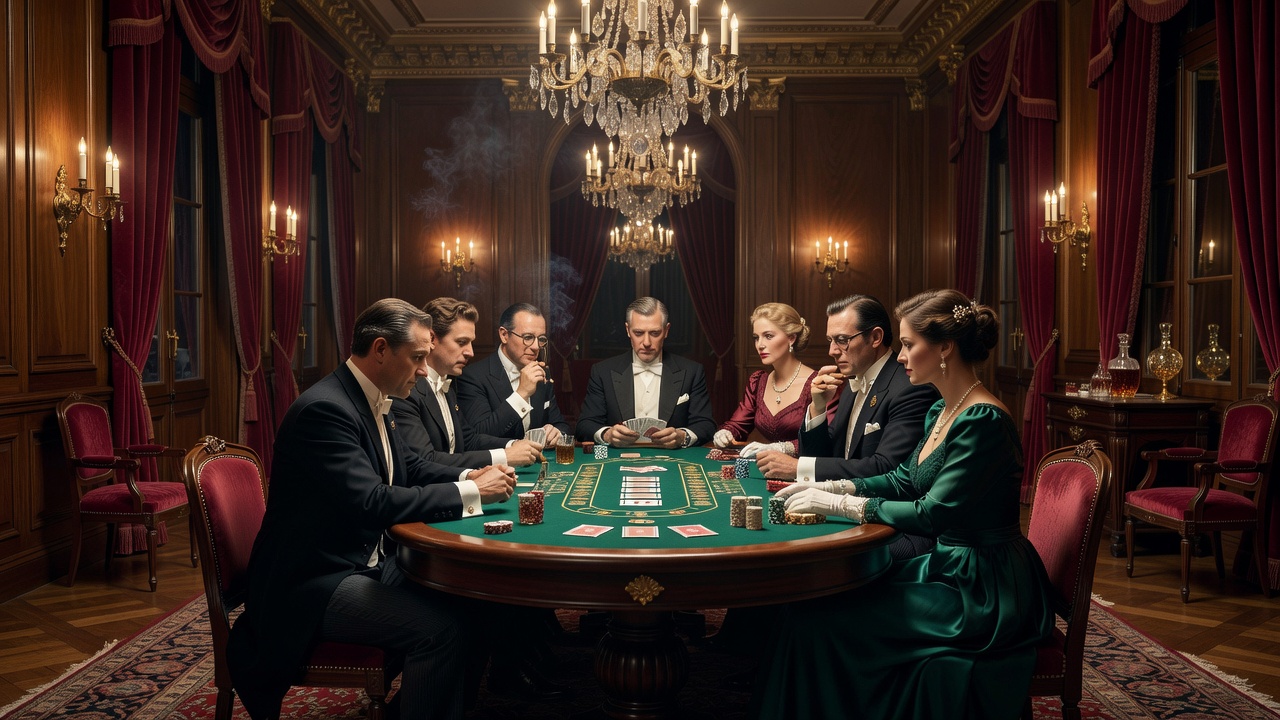
Conceived in 1863 by Prince Charles III and master architect Charles Garnier (who also designed the Paris Opera), the Casino de Monte-Carlo is the spiritual birthplace of Belle Époque elegance. While millions admire its grand atrium and Salle Renaissance, the true historical heart of high-stakes European gaming resides within the Salons Privés and Salons Super Privés.
"In the Salons Privés, silence is the supreme currency. Only the crisp slide of lacquer plaques and the soft French call of the croupier punctuate the atmosphere."
1. The Sacred Ritual of French Roulette & Chemin de Fer
Unlike standard casinos, the private salons of Monte-Carlo maintain classic 36-number single-zero European French Roulette operated by a full team of four croupiers using traditional rakes (râteaux). High-limit Baccarat and Chemin de Fer—the game favored by Ian Fleming's fictional secret agent James Bond—are played under private table minimums that frequently surpass €100,000 per hand.
2. Architectural Splendor: Gold Leaf & Stained Glass
The interior design remains virtually unchanged since the late 19th century. Towering Bohemian crystal chandeliers hang from ceilings adorned with allegorical frescoes painted by Henri Schopin. Hand-carved mahogany paneling and heavy burgundy velvet draperies create a sanctuary impervious to the passage of time.
3. Access Protocol and Private Concierge Escort
Admission to the Salons Privés requires strict verification of identity, formal evening attire, and adherence to the historical gaming charters of the Principality. Monégasque citizens themselves are legally prohibited from gaming inside the casino—preserving the institution as a dedicated haven for international patrons.
For verified heritage tours and historical archives, visit Casino de Monte-Carlo Official History.